
Challenge Yourself to Take Chances
Most players want to feel ready before they take chances.
That’s the problem.
Growth in this game—and in life—doesn’t come from comfort. It comes from stepping into moments where you might fail… and choosing to go anyway.
For players, the separator isn’t talent—it’s mindset. The ones who improve fastest are the ones willing to fail fast, fail often, and fail forward. They don’t wait for perfect reps. They chase imperfect ones, learn from them, and stack progress faster than everyone else.
For coaches, creating that environment isn’t accidental. It’s built. The best coaches design practices—especially through small-sided game challenges—that force decisions, create pressure, and demand adaptability. That’s where offensive efficiency is born. Not from running plays perfectly, but from learning how to solve problems in real time.
And for parents, this journey can feel uncomfortable to watch. Tough coaching. Hard feedback. Moments where your child struggles. But those moments aren’t setbacks—they’re opportunities. Learning how to handle tough coaching is part of becoming confident, resilient, and prepared for what comes next—on and off the court.
The question isn’t whether challenges will come.
It’s whether you’re willing to step into them.
Because the players, coaches, and families who embrace that process… are the ones who separate.
Fail Fast, Fail often, Fail forward
In this powerful video, PGC Director, Dustin Aubert, urges us to embrace failure as a catalyst for growth, championing a “fail fast, fail often, fail forward” mindset—encouraging relentless experimentation, early learning, and enthusiastic perseverance, echoing Winston Churchill’s belief that great people move from one setback to the next without losing zeal.
- Fail fast – start experimenting right away and learn from mistakes before they become high‑stakes problems.
- Fail often – make failure a regular part of the process (even in the summer) so you can identify and fix issues early.
- Fail forward – keep enthusiasm and energy high; each setback is a stepping stone toward mastery.
Small Sided Game Challenges = Efficient Offenses
Illinois men’s basketball has built the country’s most efficient offense by blending international ball‑movement concepts with classic American rim pressure. Offensive coordinator Tyler Underwood boils the system down to a “gold‑medal” shot hierarchy—gold for easy layups or open threes, silver and bronze for lesser options—teaching players to hunt open space and make split‑second decisions that force the best looks.
- Practice constraints – Scoring only on cuts, no dribble possessions, to force quality shots.
- Reading defenses – Spot the brief “0.5‑second” gaps in aggressive switches like Nebraska’s.
- Creative playmaking – Spectacular passes (e.g., Ivasich’s overhead flick) and cutters (Stoyakovich) attacking open gaps.
Why it works
Constantly attacking open space maximizes high‑percentage opportunities and keeps opponents off‑balance.
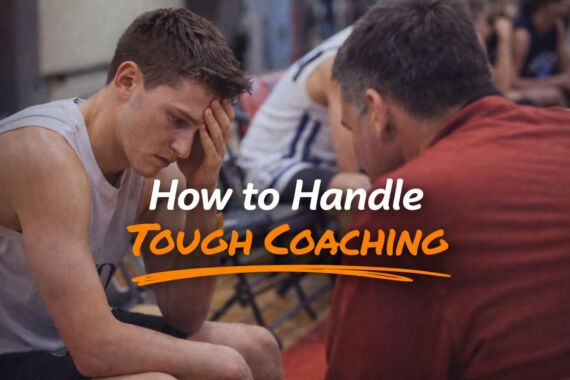
Dealing with Tough Coaches
“My coach hates me.” “He keeps yelling at me.” “I can’t do anything right”.
As a parent, hearing those words from your child is heartbreaking. Your instinct is to protect them—you want to call the coach, you want to fix it.
But in competitive athletics that reaction can be a dangerous trap. There’s a massive difference between abuse (which is never okay) and demanding coaching (which is necessary for growth).
Many young athletes today can’t tell the two apart. They see correction as a personal attack and shut down when voices get raised.
At PGC we treat “Coachability” as a skill—perhaps the most important skill. We actively teach athletes how to handle criticism, how to process “tough love,” and how to use it as fuel.
Read “Handling Criticism: How PGC Teaches Athletes to Embrace ‘Tough Love’” to understand what recruiters look for.
Related Articles

Become the Player Your Team Can’t Afford to Take Off the Floor
Unlock your potential and become the player your team cannot afford to take off the floor with essential training tips.

If I Wanted My Coach to Trust Me More, This is the #1 Thing I’d Focus on
Discover how to build trust with your coach. Focus on this one key aspect for improved coaching relationships.

Not Getting the Playing Time You “Deserve”? Here’s Why…
Not getting the playing time you deserve? Discover the reasons behind it and how to improve your chances on the field.
About PGC
PGC Basketball provides intense, no-nonsense basketball training for players and coaches. Our basketball camps are designed to teach players of all positions to play smart basketball, be coaches on the court, and be leaders in practices, games and in everyday life.
We combine our unique PGC culture with a variety of teaching methods and learning environments to maximize the learning potential of those that attend our sessions. In addition to spending 6-7 hours on the court each day, lessons will be reinforced through classroom sessions and video analysis.
Our goal at PGC is to empower you with the tools to fulfill your basketball dreams, while also assisting you in experiencing the joy of the journey.
To learn more about PGC Basketball, including additional basketball training tips and videos, visit our YouTube Channel or find us on Facebook, Instagram, and Twitter.
Share This Post