
How to Win More Basketball Games: Start with the Things Coaches Overlook
Every coach wants to win more basketball games.
The problem is most teams go looking for the answer in the wrong place.
We jump to a new zone offense.
We add an after-timeout play.
We install a wrinkle against switching.
We spend more time on special situations.
Those things matter. But this Hardwood Hustle episode made a really important point: a lot of games are won and lost long before you get to the fancy stuff.
If you want to know how to win more basketball games, start with the things coaches often overlook:
- effort
- teammate habits
- standards
- shot generation
- basketball shot selection
- substitutions
- playing the people who actually affect winning
That is the heart of this episode. Not magic. Not gimmicks. Just coaching the right things with more clarity. And that lines up with broader coaching resources too. Breakthrough Basketball specifically emphasizes defining shot selection clearly and reinforcing it consistently, while PCA points to effort as a teachable coaching focus.
Before we dive in, here are a few spots for Recommended Reads:
- 3 Basketball Player Development Strategies That Make or Break Progress
- Jump. Mud. Bubble. The 3 Habits Your Defense Is Missing
- The 10 teammate commandments
1. Effort Is Still the Cost of Admission
One of the clearest takeaways from the episode was simple: teams can play harder.
That may sound obvious, but it is one of the biggest separators in real games.
TJ and Sam talked about watching basketball at every level and seeing the same pattern over and over. Teams that lack effort lose games they should not lose. Teams that bring consistent effort usually give themselves a chance to achieve, and sometimes even overachieve.
That does not mean effort is easy to coach. It is not.
- Sometimes it takes months to raise a player’s motor.
- Sometimes young players do not know what true game effort really looks like.
- Sometimes coaches get used to the standard they see every day and stop realizing a higher standard is possible.
That was one of TJ’s best points. Great coaches often call players to a level they do not even realize they can reach yet.
Sam connected that idea to Dean Smith’s old North Carolina standard: play hard, play smart, play together. That is still a pretty strong coaching filter today.
And it fits current coaching thinking. PCA’s recent impact research specifically highlighted coaches who deliberately make effort a point of emphasis in practice.
Coach the Standard, Not Just Your Frustration
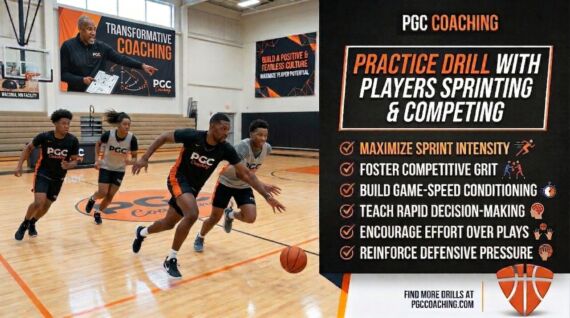
This was an important part of the episode too.
A lot of coaches know they want more effort, but what players hear is mostly frustration. The coach repeats, “We’re not playing hard enough,” without clearly teaching what the effort standard actually is.
That is where coaches can grow.
Instead of coaching with constant emotion, define the standard.
Sprint back in transition.
Hit first.
Close out with purpose.
Run to the line on the catch.
Change ends with urgency.
The standard should be clear enough that a player knows when they missed it.
2. Team Chemistry Is Not Accidental
The second foundational piece from the episode was teammate behavior.
A talented team that is disconnected will lose games it should win. A connected team that plays together can often squeeze more out of its talent than anyone expected.
But team chemistry basketball is not built by speeches alone. It is built through visible habits.
TJ gave a simple example that matters: high fives above the shoulder when a player comes out of the game. Why? Because it removes gray area. It creates a visible standard that says, “I’m for you, you’re for me, no matter what just happened.”
That matters more than people think.
A lot of culture problems happen because coaches leave too much gray area. Then when a player reacts poorly, the moment becomes emotional and personal. Stronger standards reduce that problem.
So if you want better team chemistry, do not just hope your players become better teammates. Define what teammate behavior looks like in your program.
What does support look like on the bench?
What does body language look like after a mistake?
What does coming out of the game look like?
What does celebrating another player’s success look like?
The more visible the standard, the easier it is to teach and reinforce.
3. Play the Players Who Affect Winning
This might be the most overlooked idea in the whole episode.
Not every player who looks talented actually helps you win.
Not every player with a quiet stat line is hurting you.
And not every coach is trained to see the difference.
TJ and Sam spent a lot of time on this. They talked about players who may not score much but save four to six points in transition defense, win loose balls, take tough matchups, box out, move the offense, and make teammates better. Those players often have huge impact even when the stat sheet barely notices.
That is a huge coaching lesson.
A player may be able to cook in a one-on-one workout and still hurt your team in five-on-five. Another player may be limited offensively but consistently raise your team’s floor because they do winning things every possession.
That is why coaches need to train their eyes.
Watch who wins drills in practice.
Watch who steadies the group.
Watch who erases mistakes.
Watch who makes teammates more effective.
Watch who affects winning even when the points are not there.
TJ even shared a college example of a player whose box score looked almost empty, but when he rewatched the game, he thought that player should have played even more because of all the small things that made the team better.
That is a great reminder for all of us.
4. Shot Generation Is a Coaching Job
If you want to win more basketball games, you need to help your team generate easier shots.
That sounds simple, but it is one of the hardest jobs in coaching.
Shot generation requires you to think deeply about:
- what your players do well
- where they score best from
- how your offense creates those opportunities
- what actions make life easier for them
TJ described sitting down with a piece of paper, listing his starters, and writing out where each one scores best. Then he built an action that gave each player a possible look in one of their best spots. That is a great coaching exercise.
This is where coaching becomes more than just calling plays.
You are not just asking, “What offense do I like?”
You are asking, “How do I get my players the ball where they can succeed?”
That idea lines up with shot-chart based coaching too. Breakthrough Basketball notes that shot charts help coaches identify strong and weak areas and evaluate whether the offense is actually producing shots in players’ effective spots.
So if your team is taking a lot of hard, contested, late-clock shots, do not only blame the players. Study whether your offense is helping them create anything better.
5. Basketball Shot Selection Has to Be Taught Clearly
This was another big theme in the episode, and it is one of the clearest ways coaches can improve offensive efficiency.
Players need help understanding what a good shot is.
Not “shoot with confidence.”
Not “be aggressive.”
Those phrases are fine, but they are too vague on their own.
TJ and Sam pointed back to the PGC shot selection framework and the need to hunt sevens rather than settle for average shots. In their language, a strong shot is in range, in rhythm, and with room. That is practical. That is coachable.
That same kind of structure shows up in outside coaching resources too. Breakthrough Basketball recommends clearly defining shot selection for your team and even using scoring constraints like 9-7-5-3 to reinforce shot quality.
Sam made a great point here: shot selection is often easier to teach than shot generation. Shot generation takes more study and design. But shot selection can become very clear when coaches define it well and reinforce it consistently.
And that matters because, as they noted, many games are played in the five-shot range. Teams lose because they take too many average shots.
If your team is taking a lot of:
- crowded threes
- rushed pull-ups
- deep shots outside range
- contested drives with no advantage
you are probably giving away possessions.
6. Substitutions Win and Lose Games Too
This is one coaches do not always think enough about.
Games are often lost on short runs:
- 8-0
- 10-0
- 7-0
And bad substitution patterns can be part of that.
TJ made two really strong points here.
- First, your best players, meaning the players who affect winning most, need to be on the floor more.
- Second, coaches need to think more carefully about lineup balance.
A player might look bad not because they are bad, but because they were put on the floor with the wrong combination of teammates.
Do your lineups complement each other?
Are you keeping enough ball handling on the floor?
Enough rebounding?
Enough shooting?
Enough defensive stability?
Sam added another practical example from a high school coaching discussion: even simple rest patterns, like sitting a player briefly before the end of a quarter, can help you think ahead and manage minutes more intelligently.
Substitutions are not just about who is tired. They are about fit, rhythm, and preserving what your team needs most in a given stretch.
Final Thought
If you want to know how to win more basketball games, start with the simple things that get ignored.
Demand better effort.
Build clearer teammate standards.
Play the players who affect winning.
Generate easier shots.
Teach basketball shot selection clearly.
Sub with more purpose.
Those are not flashy answers.
But they are real ones.
And that is what made this Hardwood Hustle episode so good. It reminded coaches that winning often lives in the one percenters, the small habits, the standards, and the decisions that add up over time.
If you want the full conversation behind this post, listen to the Hardwood Hustle episode that inspired it and use it with your staff to talk through where your team may be leaking wins right now. Win More Games
FAQ
Q: How do you win more basketball games as a coach?
A: You win more basketball games by improving the areas that most often decide possession-level basketball: effort, team chemistry, shot quality, lineup decisions, and standards. This episode especially emphasized effort, teammate habits, shot generation, basketball shot selection, and substitutions as practical places coaches can gain an edge.
Q: Why is basketball shot selection so important?
A: Basketball shot selection matters because average and low-quality shots quietly drain offensive efficiency. Breakthrough Basketball specifically recommends clearly defining shot selection and using constraints or rating systems to reinforce good decisions.
Q: How can substitutions affect winning in basketball?
A: Substitutions affect winning by changing lineup balance, ball handling, defensive coverage, rebounding, and overall fit. A poor lineup combination can create scoring droughts or defensive breakdowns even if the individual players are talented. That was one of the strongest practical points in this episode.
About the Author
Sam Allen and TJ Rosene
Sam and TJ host the Hardwood Hustle podcast and help coaches grow in the areas that matter most: leadership, teaching, culture, communication, and the practical decisions that help teams play better together. This post was adapted from their conversation on the small coaching habits that directly influence winning.
New Here?
Get coaching tips and tools like these delivered to your inbox each week!
Join the 15,000 coaches we’ve assisted…

Related Articles

How Basketball Coaches Process the End of the Season: What to Do When the Gym Goes Quiet
The season ends, but the emotions linger. Here’s how coaches can process the ending without rushing the reset.
How Basketball Coaches Can Grow in the Offseason: Leadership, Reflection, & the Road to a Stronger Season
The offseason isn’t just for player development—it’s for the coach. Learn how intentional reflection, mindset work, and small habit shifts can shape your leadership and transform the season ahead.
About PGC
PGC Basketball provides intense, no-nonsense basketball training for players and coaches. Our basketball camps are designed to teach players of all positions to play smart basketball, be coaches on the court, and be leaders in practices, games and in everyday life.
We combine our unique PGC culture with a variety of teaching methods and learning environments to maximize the learning potential of those that attend our sessions. In addition to spending 6-7 hours on the court each day, lessons will be reinforced through classroom sessions and video analysis.
Our goal at PGC is to empower you with the tools to fulfill your basketball dreams, while also assisting you in experiencing the joy of the journey.
To learn more about PGC Basketball, including additional basketball training tips and videos, visit our YouTube Channel or find us on Facebook, Instagram, and Twitter.







Share This Post